Branding: The Fingerprint of an Absence
Our Director of Communications on urgency, strategy, and why saying no is the hardest — and most important — thing a small team can do.
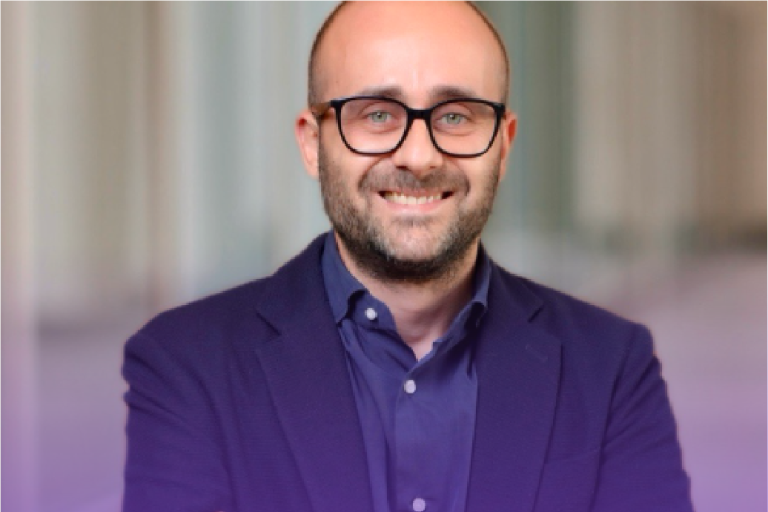
Ask Gustavo Banchero what a brand is, and he doesn’t talk about logos or color palettes.
“A brand is a memory,” he says. “It’s what remains in the mind or in the heart of the person when I’m gone. It’s like the fingerprint of an absence.”
That definition — poetic, precise, and deliberately uncomfortable — is what drove a three-year transformation in how Ascendus thinks about communications. Not a rebrand. Not a campaign. A fundamental shift in what brand is supposed to do for the organization — and for the people it serves.
Gustavo presented this journey at the 2026 OFN Marketing & Communications Practitioner Summit in Arlington, VA. His lightning talk, From Operational to Strategic: How We Turned Brand into a Driver of Organizational Impact, was the session’s closing presentation. What he shared resonated far beyond the room.
The urgency trap.
CDFIs are built for speed. The need is real, the resources are finite, and the instinct to move — now, always — is embedded in the culture.
In a conversation with Brendon Miller, Executive Vice President, Chief of Staff and Head of Communications at OFN, the framing landed with precision: CDFIs are programmed for emergency operations. For decades, the sector has been asking permission, justifying its existence, explaining why the work matters. In that mode, everything is urgent. Everything is for yesterday.
Gustavo’s response was just as direct: “CDFIs need more branding.”
Not more content. Not more posts. More clarity about who we are, what we promise, and whether we’re delivering on it.
At Ascendus, that urgency had a concrete shape. In 2020, the organization completed a rebrand — from Accion East to Ascendus. The output was a Brand Style Guide: logo, color palette, fonts. Standard deliverables. From there, communications operated with one manager, working tactically. Fulfilling requests. Posting content. Measuring output by volume.
“We came with the inertia of not having a brand to handle — because the brand was a decision made by Accion. And suddenly, we were owners of our own asset. Well, it’s not just a style guide. It’s a strategy.”
The question that changed everything.
Gustavo didn’t start in communications. He joined Ascendus in 2022 as a Customer Experience Manager. Then Senior CX Manager. In late 2024, his transition into communications began, and by January 2025 he stepped fully into the Director of Communications.
That path matters — because it shaped how he sees the work.
“Communication generates expectation. Operation generates perception. My job is to make sure those two things match. That we’re always up to what we promise.”
In 2023, Ascendus launched a Brand Committee. For the first time, the Leadership Team was involved in defining what brand means — not as approvers, but as participants. They used the Brand Key Framework to define a Brand Promise for each audience: small business owners, funders, and internal staff.
“When the Leadership Team got involved, communication and branding stopped being something from a department that did things. It started being something of everyone. Although communications can own many KPIs, we build the brand among everyone — because after all, it is what each of us says.”
Saying no.
Ask Gustavo what he had to stop doing to build what mattered, and the answer is immediate.
“I had to stop saying yes.”
He pauses.
“That’s a difficult exercise. The work we do is so beautiful, so important, so meaningful, so impactful — that when you say no, you think it won’t enable something. But I’m convinced of the vision of where we’re going. And if I stop saying yes to everything, it takes us to a better place.”
Saying no, he explains, isn’t a service failure. It’s a strategic act. It creates the space to ask why — why this, why now, how does this connect to our organizational strategy, to our communication strategy? The no enables a fully justified yes.
“We live in such a fast-paced rhythm, everything so fast, everything for now, all the solutions urgent. And when you stop to think — hey, what did I stop doing? — it’s inspiring. Because I think we all go through the same thing.”
Multiple KPIs, one dashboard.
In 2025, Gustavo built a Brand Health Dashboard. It started with nearly 80 KPIs mapped across departments. Hours of reviewing and refining — with the support and push of Victoria Richardson, Chief Development Officer — brought it down to 31. All all tied to organizational goals and impact outcomes.
“When you work in a CDFI, when you work on impact, every decision has to maximize that impact. Resources are limited. Every small resource of time and money has to contribute to the mission.”
The dashboard tracks brand health across four stages: Awareness, Differentiation, Relevance, and Loyalty across all audiences. But the real move was integration. Brand metrics now sit on the Organizational Dashboard — alongside Lending, Credit Risk, Finance, People Operations, and Operations & Innovation.
“We have an organizational dashboard, and the goal was to integrate communications so that everything we’re doing is shown and has the impact we want.”
Annual planning now flows from organizational goals to brand objectives to budget to operations. Brand informs resource allocation.
One director. One external team.
Gustavo built this with a lean, hybrid structure: himself and an external agency working part-time. No dedicated in-house content team.
“I had a very direct conversation with Paul,” he recalls, referring to CEO Paul Quintero. “I told him: let me build a team that is highly efficient. Trust me. And he said — go for it.”
What made it possible wasn’t headcount. It was clarity.
“The perfect is the enemy of the good. I’m not saying we don’t need a bigger team — we do a lot and obviously we need more. But strategy is what marks the efficiency. When you have a clear goal, when you have guardrails, the frameworks, the definitions — it allows you to operate faster and do more, because a lot of questions have already been answered.”
What the room confirmed.
At the OFN Summit, surrounded by CDFI communications professionals from organizations of all sizes, Gustavo found something he didn’t expect: alignment.
“I saw a lot of alignment. I loved seeing other colleagues opening up, sharing their opinions and their day-to-day. There’s a very important need to work better with the tools we have. We’re in a complex context where efficiency, lateral thinking, reviewing processes — it happened to all of us.”
He pauses again.
“I felt very accompanied.”
And then, the line that captures why this work matters — not just for Ascendus, but for the sector:
“Strategy is not something abstract. Strategy is thought. Strategy is developed. Strategy builds action plans. Strategy is a critical thinking space, a space to reflect, to review. And I think we’re in a world that increasingly values the brands and organizations that have clarity about where they’re going, who they are, and that can adapt and respond quickly to what happens.”
What comes next.
So, we asked: what does the future look like?
Gustavo sees more integration. Closer work with the Board of Directors — something already underway. A deeper partnership with People Operations to strengthen internal communications for the team Ascendus calls its Ascenders. And a continued, deliberate effort to make the brand match the reality of the work.
“What I hope is that every time our audiences think of Ascendus, they think of a refuge. An organization that generates real, transformational impact.”
He sees that impact differently for each audience. For small business owners, it means being the companion on the journey — the steady presence that walks alongside the hero, not in front of them. For funders, it means a promise of lasting, measurable change. For Ascenders, it means building the kind of workplace people are proud to belong to.
“We have so much ahead. More internal communication, more work with People Operations, more connection between what we say and what our team experiences every day. That’s the next chapter.”
The framework is built. The dashboard is running. The question now isn’t whether brand matters at Ascendus. It’s how high it can reach.
___
Gustavo Banchero is Director of Communications at Ascendus and a member of the Board of Directors at SACCONE | Estrategia · Marketing. He teaches undergraduate and graduate courses at the Universidad Nacional de La Plata, Argentina. He is, by his own description, a passionate person — and a very proud dog dad to Gala.