Ascendus measures impact through one theory of change that follows each client from capital and coaching to a stronger business, a healthier household and a thriving community.
By Paul Quintero, CEO, Ascendus
Every CDFI can report how much capital it deployed and how many loans it closed. Those numbers matter, and they show funders that the work is happening. The question that keeps our field honest goes one step further: what changed for the people who received that capital? We want to know whether the business is stronger two years later, whether the household is building savings and whether the neighborhood gained a job.
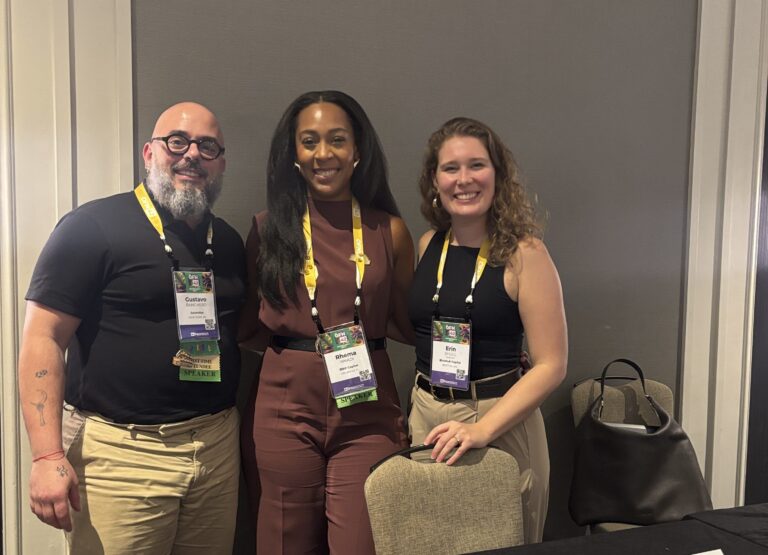
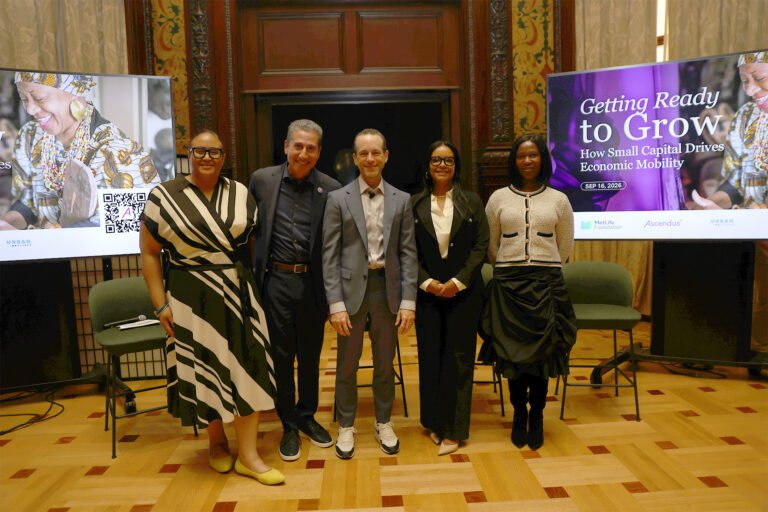
That question shaped From Goals to Measurement: Building an Impact Framework That Fits, a deep dive I co-led at OFN42 in New Orleans on October 22 with Sahra Halpern, President and CEO of Business Consortium Fund, and Aliana Pineiro, Chief Impact Officer of Boston Impact Initiative. Howard Wial, Senior Vice President and Director of Research at the Initiative for a Competitive Inner City, moderated the conversation and brought the perspective of an experienced impact evaluator. The session was designed for CDFIs taking their first steps in impact measurement and for those strengthening a practice they already have.
Start with what you believe
Before we chose a single metric, we wrote down our theory of change. It rests on two beliefs. First, capital and coaching have a direct and positive impact on small businesses, helping them stay open and grow. Second, open and growing businesses strengthen household financial health: they lift income and credit and, with applied financial education, build the ability to spend, save, borrow and plan. Over time, that progress becomes well-being, with resilient financial systems and opportunities a family can pursue for years.
The interventionCapital + coachingLending, education and technical assistance
The businessOpens, grows, hiresRevenue growth and sound financial planning
The householdFinancial health growsIncome, credit and the ability to spend, save, borrow and plan
The ascensionWell-beingResilient financial systems and opportunities pursued over time
Our theory of change, from capital and coaching to ascension.
One model sits behind every Ascendus story and every claim we make. When a framework starts from beliefs like these, each metric has a clear reason to exist.
Follow the client through every step
We organize our measures in four steps, and each step creates the next.
- Activities are what we do: small business lending, coaching and technical assistance.
- Outputs are what we count: the number and dollar value of loans, coaching sessions and hours of financial education.
- Outcomes are what changes for clients: access to capital, the ability to manage it, repayment, and graduation to larger loans through Get Ready or to a bank relationship.
- Impacts are what changes in lives and communities: business survival, jobs and revenue; household income, credit and financial health; and community wages, benefits and conditions.
The first two steps describe our effort. The last two describe the client’s change. The test I shared in New Orleans is simple: if the client is missing from the sentence, we are describing our own work. Outputs remain essential, and our attention belongs where the client’s progress shows up.
Eight lessons from our own practice
Building this framework at Ascendus taught us a few things we would offer any CDFI starting or strengthening its own:
1Make the commitment to track impact metrics.
2Less is more. Focus on what is necessary.
3Keep it simple, consistent, comparable and reliable.
4Select measures with a broader comparison set.
5Track clients over time with longitudinal measures.
6Include subjective as well as objective measures.
7Create impact dashboards, and use them.
8Get the most from the data already in your systems.
Dashboards earn their place when people use them to decide what comes next. Our communications team applies the same principle, with brand metrics on our organizational dashboard alongside lending and operations, as Gustavo Banchero shared in Speed Needs Direction.
A framework that fits
The session closed with a hands-on activity in which participants applied this approach to build an impact framework for a hypothetical CDFI. A framework that fits grows with the organization. CDFIs at any stage can begin with their beliefs, a short list of reliable measures and the commitment to track them over time, then add depth as their data matures.
We are grateful to Sahra, Aliana, Howard and everyone in the room who built frameworks with us, and we look forward to learning from what each organization measures next.
Over more than 35 years, Ascendus has deployed more than $435 million to over 62,000 entrepreneurs. Behind each of those numbers is a client whose progress we are committed to measuring.