Managing Cash Flow Consistently Over Time
A Core Practice for Business Stability
A Common Operating Reality
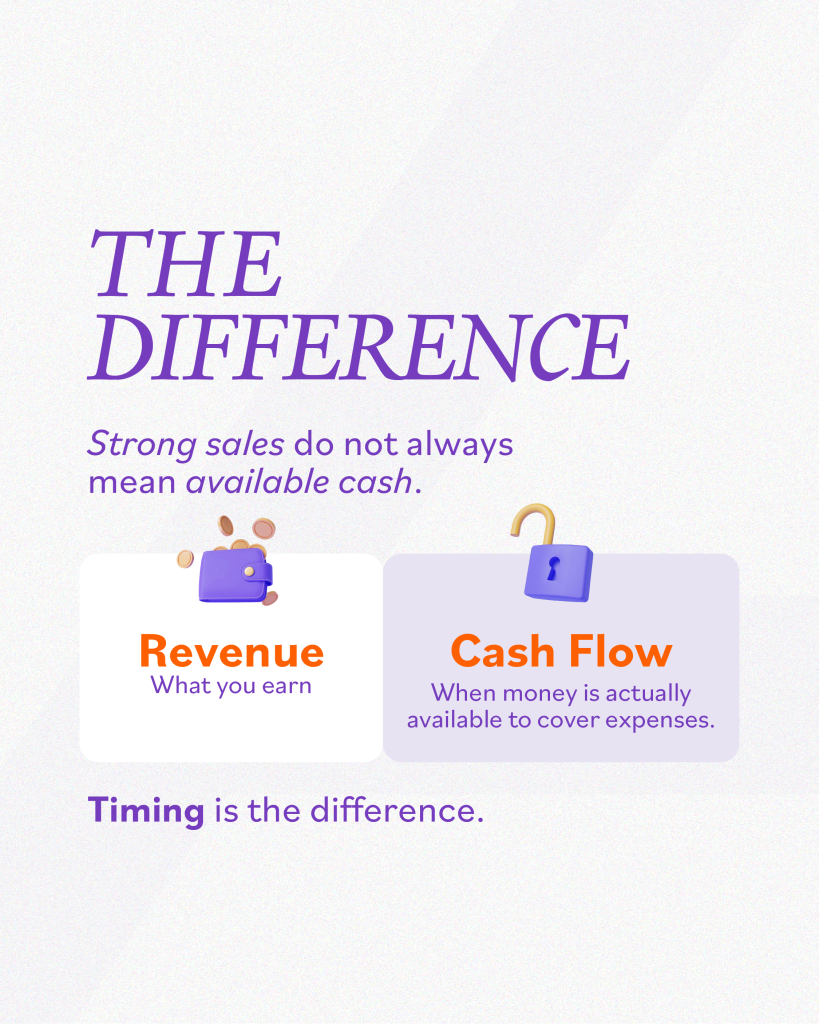
For most small businesses, cash does not move in a straight line. Revenue comes in at different moments, while expenses often follow a fixed rhythm. This dynamic is part of day-to-day operations—not a sign that something is wrong.
Over time, how a business manages this imbalance becomes a key driver of stability.
A Practical Lens: Consistency Over Intensity
Sustainable businesses are not built through constant reaction. They are built through steady financial habits applied consistently, regardless of short-term changes.
Managing cash flow is less about responding to isolated moments and more about maintaining clear, repeatable practices that support operations over time.
Why Consistent Cash Flow Management Matters
Even businesses with strong sales can face pressure if cash is not available when obligations come due. Without regular visibility, small gaps can quickly affect decision-making and operations.
Consistent cash flow management helps businesses:
- Meet recurring obligations on time
- Reduce reliance on last-minute financing
- Maintain operational continuity
- Strengthen long-term financial stability
Over time, these practices build confidence—for owners and for anyone evaluating the health of the business.
What This Looks Like in Practice
Businesses that manage cash flow well tend to focus on a few core behaviors. They pay attention to how money moves, plan ahead for fixed costs, and avoid committing resources without understanding timing.
This does not require complex systems. It requires regular attention and simple routines that are followed consistently.
Action Steps to Support Cash Flow Stability
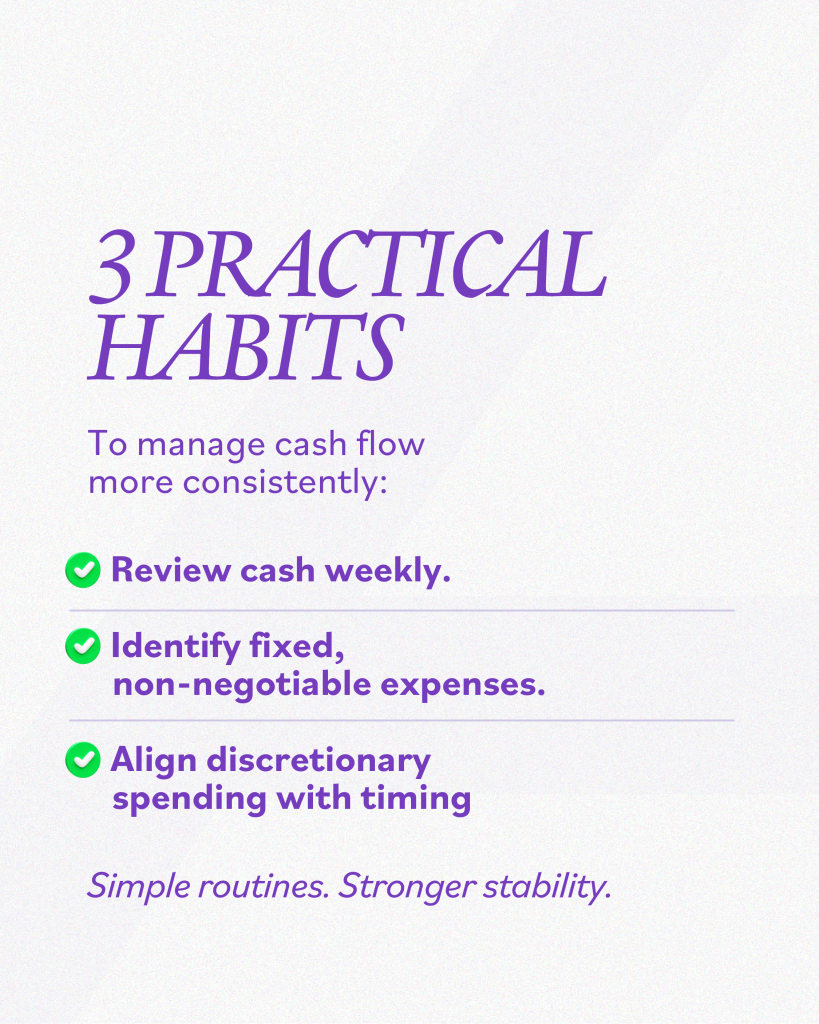
- Review Cash Regularly
Set a recurring moment to review cash coming in and going out. Regular check-ins help surface issues early and reduce surprises. - IdentifyNon-Negotiable Expenses
Know which expenses must be covered each cycle—such as rent, payroll, utilities, or debt payments. These form the baseline for planning. - Maintaina Modest Buffer When Possible
Even a small reserve can help absorb timing gaps and reduce pressure when inflows are delayed. - Align SpendingWithCash Timing
Not all expenses need to happen immediately. Timing discretionary spending thoughtfully preserves flexibility.
Tools That Can Help
Many businesses rely on simple tools to support consistent cash flow management, including:
- Basic cash flow trackers or spreadsheets
- Accounting software
- Business bank account alerts
- Scheduled or automated bill payments
The most effective tools are the ones that fit your operations and are used consistently.
Our Perspective
Stability is built through steady practices.
Managing cash flow consistently over time supports stronger operations, clearer decisions, and the ability to meet commitments with confidence—no matter what the business cycle brings.